13 October 2026
Mattress and Pillow Components: How Immoricon Helps You Source High-Quality Products from North Macedonia
A mattress can look perfect in a showroom. A pillow can feel exceptionally comfortable during the first few nights. But what happens after six months of regular use? Or after hundreds of customers have purchased the same product? That is when the real quality of a bedding product becomes visible.
For retailers, wholesalers, bedding brands, and manufacturers, product quality goes far beyond appearance. It depends on what is happening inside the mattress or pillow, from the foam density and spring construction to the filling materials, fabrics, stitching, and finishing details.
A mattress that loses its shape too quickly can lead to customer complaints. A pillow that becomes flat after a few weeks can damage a brand's reputation. Even a small inconsistency in component quality can affect an entire production batch. This is why experienced buyers understand that sourcing the right components is just as important as choosing the right finished product.
At Immoricon, we help businesses navigate the complexities of sourcing mattresses, pillows, bedding products, and their components from North Macedonia and the wider Balkan region. Our focus is on connecting buyers with suitable manufacturing partners, supporting quality requirements, and making the sourcing process more transparent and manageable. Because when the components are right, everything that follows becomes easier.
Why Component Quality Should Be Your First Priority When Sourcing Bedding Products
Imagine two mattress manufacturers offering products that look almost identical. Both mattresses have attractive covers, similar dimensions, and comparable packaging. One supplier offers a slightly lower price, making it an appealing option for a retailer looking to increase margins.
However, after several months, customers begin noticing differences. One mattress maintains its shape and support, while the other develops uncomfortable impressions. One continues to provide consistent comfort, while the other starts generating complaints about uneven support. The difference may come down to components that customers never see.
Foam specifications, spring quality, fabric construction, and assembly consistency all influence how a mattress performs over time. For businesses purchasing hundreds or thousands of products, these differences can have significant financial consequences. Returns, replacements, negative reviews, and damaged customer relationships can quickly outweigh the savings achieved through a lower initial purchasing price.
The same principle applies to pillows. A lower-cost filling might appear attractive during procurement, but if it loses volume or becomes uneven after repeated use, the final product may fail to meet customer expectations. Excellent component quality protects product performance, customer satisfaction, and long-term profitability.
This is where having an experienced sourcing partner becomes particularly valuable. Instead of evaluating suppliers based primarily on quotations, Immoricon helps buyers consider the materials, specifications, manufacturing capabilities, and quality expectations behind the finished product.
Understanding the Components That Determine Mattress Quality
Imagine two mattress manufacturers offering products that look almost identical. Both mattresses have attractive covers, similar dimensions, and comparable packaging. One supplier offers a slightly lower price, making it an appealing option for a retailer looking to increase margins.
However, after several months, customers begin noticing differences. One mattress maintains its shape and support, while the other develops uncomfortable impressions. One continues to provide consistent comfort, while the other starts generating complaints about uneven support. The difference may come down to components that customers never see. Foam specifications, spring quality, fabric construction, and assembly consistency all influence how a mattress performs over time.
For businesses purchasing hundreds or thousands of products, these differences can have significant financial consequences. Returns, replacements, negative reviews, and damaged customer relationships can quickly outweigh the savings achieved through a lower initial purchasing price.
The same principle applies to pillows. A lower-cost filling might appear attractive during procurement, but if it loses volume or becomes uneven after repeated use, the final product may fail to meet customer expectations. Excellent component quality protects product performance, customer satisfaction, and long-term profitability.
This is where having an experienced sourcing partner becomes particularly valuable. Instead of evaluating suppliers based primarily on quotations, Immoricon helps buyers consider the materials, specifications, manufacturing capabilities, and quality expectations behind the finished product.
Understanding the Components That Determine Mattress Quality
A mattress is a carefully engineered combination of materials. Each component serves a specific purpose, and the quality of the final product depends on how well those components work together.
For buyers sourcing from North Macedonia, understanding these elements is essential when comparing suppliers or developing private-label mattress collections.
1. Foam: The Foundation of Comfort and Support
Foam is one of the most important materials used in modern mattresses. Depending on the construction, manufacturers may use polyurethane foam, high-resilience foam, memory foam, latex, or combinations of different materials. Each type provides different performance characteristics.
Memory foam is known for its ability to conform to the body and distribute pressure. High-resilience foam can provide responsive support, while conventional polyurethane foam is widely used across different mattress categories. However, selecting the type of foam is only the beginning. Buyers should also evaluate density, firmness, compression behavior, resilience, and durability.
Two suppliers might offer mattresses containing the same general type of foam, but the actual specifications can differ significantly. For example, foam density is often expressed in kilograms per cubic metre (kg/m³). This measurement indicates how much material is contained within a given volume. While density can be relevant to durability, it should not be confused with firmness, and neither measurement alone guarantees product quality.
A successful sourcing decision requires understanding how the foam will perform within the complete mattress construction. Immoricon helps buyers communicate these technical expectations to potential manufacturing partners, making it easier to identify materials suited to the intended product category and price range.
2. Spring Systems: The Hidden Structure Behind Mattress Performance
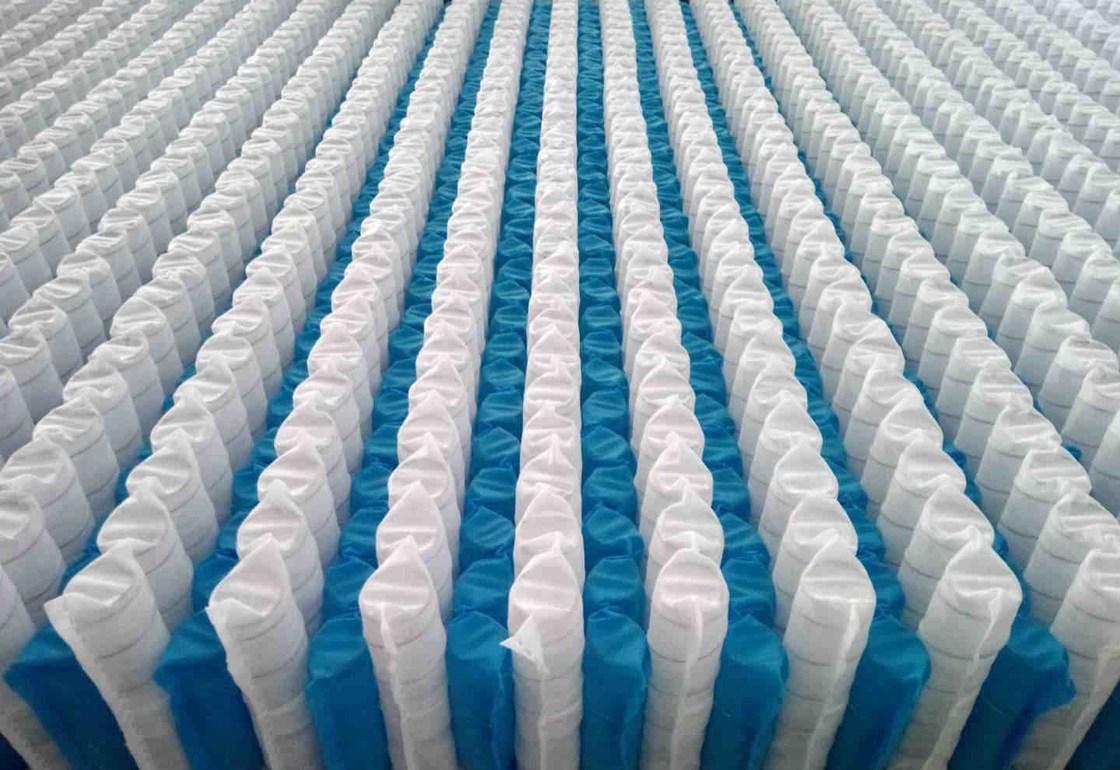
Spring systems are another essential consideration, particularly for retailers and manufacturers sourcing innerspring and hybrid mattresses. Two commonly used systems are Bonnell springs and pocket springs.
Bonnell springs are interconnected metal coils that create a traditional support structure. They are often used in economical mattress constructions where cost efficiency and reliable basic support are important.
Pocket springs, on the other hand, are individually wrapped coils that can respond more independently to pressure. This construction can improve motion isolation and help manufacturers create different support zones.
But spring type alone does not determine quality. Wire diameter, coil geometry, steel properties, spring count, tempering, and assembly consistency can all influence performance. A well-manufactured spring unit should provide consistent support and withstand repeated compression within its intended use.
For buyers developing a private-label mattress range, choosing the appropriate spring system is a strategic decision. An entry-level collection may require an economical construction, while a premium product line may benefit from more sophisticated pocket-spring systems and layered comfort materials. Immoricon supports buyers in identifying suppliers capable of meeting these different requirements, helping businesses balance comfort, performance, and production costs.
3. Mattress Covers, Quilting, and Protective Layers
Although internal support systems receive considerable attention, the outer components of a mattress are equally important. Mattress covers influence the product's appearance, surface feel, breathability, and maintenance requirements. Common materials include polyester, cotton blends, knitted fabrics, and specialised textiles designed for particular comfort or functional properties.
The choice of fabric should reflect the mattress's intended market. For example, a hospitality mattress may require a durable, easy-to-maintain cover, while a premium retail mattress may prioritise softness, appearance, and a more refined surface finish.
Quilting materials, non-woven fabrics, felt layers, and protective insulators also play important roles. Felt and other insulator layers can help separate spring systems from comfort materials. Non-woven textiles may be used in internal constructions, pocket-spring assemblies, and protective applications.
These components may seem minor individually, but together they contribute to the structural integrity and overall finish of the mattress. At Immoricon, we recognise that sourcing a complete mattress often involves coordinating several material categories. Our approach considers both the finished product and the components required to manufacture it consistently.

Pillow Components: Small Details That Make a Significant Difference
Pillows are often considered simpler products than mattresses. They contain fewer structural components, are easier to transport, and generally require less complex assembly. However, this simplicity can be misleading.
A pillow's comfort, durability, and perceived value depend heavily on the quality of its filling and cover materials. For businesses sourcing pillows in large quantities, small differences in filling consistency or stitching quality can create noticeable differences across an entire product collection.
1. Pillow Filling: Choosing the Right Material for the Right Market
The filling is the heart of a pillow. It determines much of the product's loft, softness, support, shape retention, and maintenance requirements.
- Polyester fibre is commonly used in affordable and mid-range pillows because it is lightweight, versatile, and relatively easy to maintain.
- Microfibre fillings can provide a finer, softer feel, making them attractive for buyers developing more premium synthetic-filled collections.
- Memory foam pillows offer a different experience, using moulded or shredded foam to provide contouring support.
- Feather, down, and other specialised fillings may also be suitable for particular retail or hospitality segments.
Yet even within the same material category, quality can vary. Fibre thickness, filling weight, resilience, processing quality, and distribution all affect the finished product.
A pillow with insufficient filling may quickly lose its shape. Poorly distributed filling can create lumps or uneven support, while inappropriate material choices may lead to disappointing wash performance. This is why sourcing pillows should begin with clearly defined product specifications rather than appearance alone.
Immoricon helps businesses communicate their requirements to manufacturing partners, including filling type, dimensions, target weight, firmness, packaging, and intended market positioning.
2. Pillow Covers, Stitching, and Finishing Quality
A pillow's cover is the first component a customer touches. Its fabric composition, weave or knit construction, breathability, and surface texture all contribute to the sleeping experience. Cotton and cotton-blend fabrics are common choices, while polyester and other synthetic textiles can offer practical benefits related to maintenance and cost.
However, fabric selection should always be considered alongside stitching and construction quality. Weak seams, inconsistent stitching, or poorly finished edges can affect durability, particularly when pillows are washed frequently. For hotels, hospitals, and other high-use environments, these details become especially important. A product designed for repeated laundering requires appropriate materials and construction methods.
Immoricon encourages buyers to evaluate samples carefully and establish clear quality expectations before committing to larger orders. This helps reduce uncertainty and supports greater consistency between approved samples and subsequent production batches.
Why North Macedonia Is an Attractive Sourcing Destination for Mattress and Pillow Components
For European bedding businesses, sourcing decisions increasingly involve more than comparing manufacturing prices. Transportation costs, lead times, communication, production flexibility, and supply chain reliability can have just as much influence on profitability.
North Macedonia offers several practical advantages worth considering. Its geographic position in Southeast Europe makes it accessible to many European markets by road, creating opportunities for shorter transport routes compared with sourcing from distant manufacturing regions. This can be particularly valuable for businesses managing seasonal collections, replenishment orders, or products that require relatively frequent deliveries.
Mattresses and pillows are also bulky products. Transportation efficiency matters because shipping costs can represent a meaningful share of the final landed cost. Working with manufacturers closer to the destination market may provide greater flexibility in logistics planning.
North Macedonia also has an established textile and manufacturing sector, offering a foundation for sourcing textile-related products and components. However, not every supplier manufactures every type of bedding component. Some specialise in finished products, while others focus on fabrics, foam processing, spring assemblies, or other production activities.
Finding the right supplier therefore requires careful evaluation. The advantage of sourcing from North Macedonia is strongest when geographic proximity is combined with the right manufacturing capabilities and consistent quality management. Immoricon helps international buyers explore these opportunities while avoiding the assumption that every manufacturer can meet every technical requirement.
How Immoricon Helps Businesses Source High-Quality Mattress and Pillow Components
Finding a supplier is relatively straightforward. Finding one that understands your product requirements, communicates effectively, and can consistently meet your expectations is a different challenge.
Consider a European bedding retailer preparing to launch a new mattress and pillow collection. The company has already identified its target customers and price points. It knows which products it wants to introduce but has limited knowledge of manufacturing options in North Macedonia. It needs suitable suppliers, clear quotations, reliable samples, and confidence that production quality will match the agreed specifications. Without local sourcing knowledge, this process can involve weeks of research, repeated communication, and uncertainty about supplier capabilities. Immoricon helps make that journey more structured.
We Start by Understanding Your Product Requirements
Every sourcing project begins with the product itself. Are you looking for complete mattresses or individual spring systems? Do you need finished pillows or specific filling materials? Are you developing a budget-friendly collection, a premium private-label range, or products for the hospitality industry? These questions shape the sourcing strategy. We consider factors such as product dimensions, material specifications, expected order quantities, quality requirements, customisation needs, and delivery expectations. A clearly defined sourcing brief helps manufacturers provide more accurate quotations and reduces the likelihood of misunderstandings during production.
We Help Identify Suitable Manufacturing Partners
Not every manufacturer is the right fit for every buyer. Some suppliers are better suited to high-volume standardised production. Others may be more appropriate for smaller orders, specialised materials, or customised products.
Immoricon's sourcing experience and manufacturing network help businesses identify potential partners based on their specific requirements. For buyers seeking multiple product categories, this can also simplify supplier coordination. Instead of approaching mattress, pillow, textile, and component manufacturers independently, businesses can work with a sourcing partner who understands how these products fit together.
We Support Quality-Focused Supplier Evaluation
Excellent component quality should be supported by evidence. A manufacturer's promises are important, but technical specifications, production samples, inspection procedures, and relevant test documentation provide a stronger basis for purchasing decisions. Depending on the product and market, buyers may need to consider standards such as EN 1957 for mattress functional characteristics and assessment methods, or EN ISO 12952 for the ignitability of bedding items.
Textile certification requirements may also be relevant. For example, buyers sometimes request OEKO-TEX STANDARD 100 certification for applicable textile components. The appropriate requirements depend on the product, intended use, destination market, and applicable regulations. Certification should always be verified for the specific materials and products being purchased. Immoricon helps buyers clarify these expectations with suppliers and coordinate appropriate quality checks and documentation requirements.
We Make Customisation and Private-Label Sourcing Easier
Many bedding businesses want products that reflect their own brand identity. This may involve customised mattress constructions, specific pillow fillings, branded covers, labels, packaging, or tailored product dimensions. Private-label sourcing requires careful communication because even small specification differences can affect the final product.
Immoricon supports buyers throughout the supplier coordination process, helping ensure that customisation requirements are clearly communicated before production begins. For businesses introducing new collections, this can make product development more manageable and help reduce costly misunderstandings.
Why the Lowest Component Price Is Rarely the Best Sourcing Strategy
Cost remains an important consideration for every retailer, wholesaler, and manufacturer. However, the lowest quotation does not always produce the lowest total cost. Imagine purchasing 1,000 pillows from two different suppliers. Supplier A offers a lower unit price, but the filling quality is inconsistent and a noticeable proportion of customers report that their pillows lose shape. Supplier B offers a slightly higher price, but the products maintain more consistent quality and generate fewer complaints. The difference in purchasing price may initially favour Supplier A. Over time, however, returns, replacement costs, customer service expenses, and lost repeat purchases can change the calculation.
The same applies to mattresses, where product failures can be especially expensive because of transportation, handling, and replacement requirements. A more useful approach is to evaluate the total cost of ownership. This includes purchasing costs, transportation, quality control, product durability, expected returns, and the commercial impact of customer satisfaction.
At Immoricon, we encourage buyers to consider the long-term value of the components they source. A well-selected component can contribute to better product consistency, fewer quality-related issues, and stronger relationships with end customers.
Building a More Reliable Bedding Supply Chain with Immoricon
The bedding industry depends on consistency. Retailers need products that meet customer expectations. Wholesalers need reliable deliveries. Manufacturers need components that perform as specified and integrate smoothly into production. Achieving these outcomes requires more than placing an order. It requires clear specifications, suitable manufacturing partners, appropriate quality controls, and effective communication throughout the sourcing process.
For businesses purchasing from North Macedonia, local knowledge can make a meaningful difference. Immoricon brings together an understanding of the regional manufacturing environment and the practical needs of international buyers. Whether you are sourcing pocket springs, foam components, mattress covers, non-woven fabrics, pillow fillings, finished pillows, or complete mattresses, our goal is to help you find solutions that match your product requirements and commercial objectives.
We understand that every sourcing decision affects the reputation of the business making it. That is why our approach begins with understanding what you need, continues with identifying suitable manufacturing opportunities, and focuses on building supplier relationships that support long-term growth.
Source Better Mattress and Pillow Components with Immoricon
The quality of a mattress or pillow begins long before the finished product reaches a warehouse, showroom, or customer's bedroom. It begins with the materials selected, the components manufactured, and the decisions made throughout the sourcing process. For bedding businesses looking to strengthen their supply chains, improve product consistency, or develop new collections, North Macedonia offers manufacturing opportunities worth exploring. And with the right sourcing partner, those opportunities become easier to evaluate and manage.
At Immoricon, we help businesses turn their product requirements into practical sourcing solutions. From identifying suitable manufacturers to coordinating specifications, samples, customisation, and quality expectations, we support buyers who want greater confidence in their bedding supply chains. Whether you are developing a new private-label collection, searching for better-quality mattress components, or looking to diversify your pillow and bedding suppliers, we can help you explore the right options.
Looking for reliable mattress and pillow component suppliers in North Macedonia?
Contact Immoricon and tell us what you are looking to source. Let's explore how we can help you find the right manufacturing partners and build a stronger, more dependable bedding product range.
Get in touch with us today
Related News

14 September 2026
How to Prepare for the Autumn Season in the Bedding Industry
Autumn is one of the most important transition periods for the bedding industry. For retailers, wholesalers and bedding brands, however, autumn starts much earlier than the first cold night. At Immoricon, we work closely with manufacturers and buyers across the bedding and textile supply chain. One thing experience teaches quickly is that seasonal sourcing works best when businesses prepare for demand rather than react to it.
Read More...
10 June 2026
How to Choose the Best Products from the Sleeping Industry: Pillows, Mattresses, Bedding and Duvets
Consumers today are no longer buying a pillow or duvet simply because they need one. They are looking for better sleep, healthier materials, sustainability credentials, and products that fit their lifestyle. Choosing the right sleeping products does not revolve aboud price only. It is about understanding your market, selecting the right materials, and building a product portfolio that customers trust.
Read More...